5 Things Casting Directors Notice in Your Self Tape (That You Probably Ignore)
You're focused on your performance. But casting directors are noticing things you've never even thought about. Here's what actually makes them click "next" — and what makes them keep watching.
You've rehearsed the scene a hundred times. You nailed your emotional beats. You're proud of that third take.
Then you don't get a callback.
What happened?
Casting directors watch hundreds of self tapes per week. Sometimes thousands. They've developed a radar for small things that most actors completely overlook.
Casting directors often make a decision in the first 5-10 seconds. Everything in your tape either earns you more time or loses it.
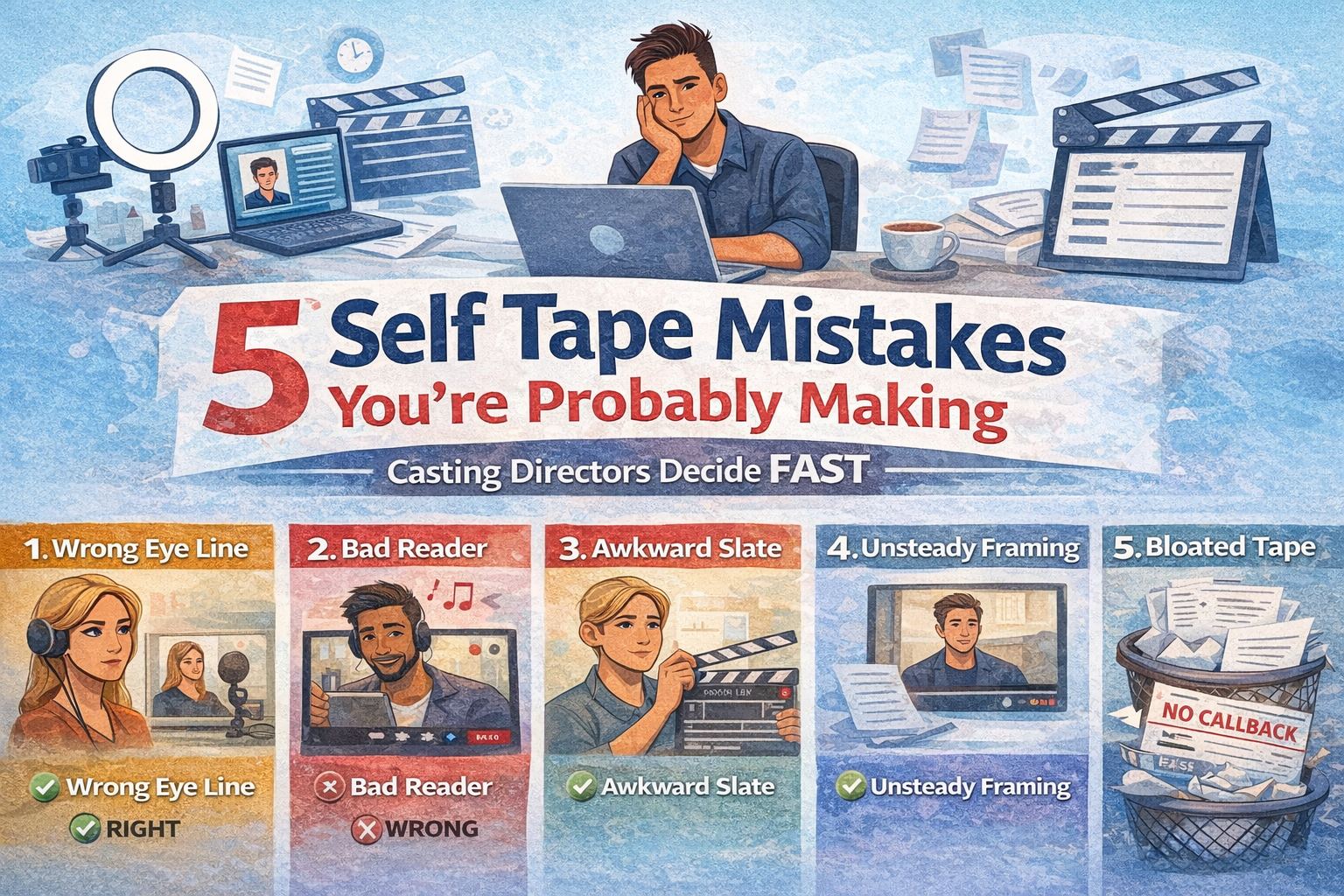
Here are five things they notice that you're probably ignoring.
1. Your Eye Line Is Off
This is the most common technical mistake in self tapes — and casting directors spot it instantly.
Your eye line should be just to the side of the camera lens, at lens height. Not above it. Not below it. Not three feet to the left.
When your eye line is wrong, it creates a subtle disconnection. The casting director can't quite "meet" you through the screen. It feels off, even if they can't articulate why.
The fix:
Have your reader position themselves so their eyes are right next to the camera lens. Use a mark on the wall if you need to. Check your framing before every session.
And never, ever read directly into the camera unless specifically asked to. That's a different technique for direct address — not for scene work.
2. Your Reader Is Hurting You
Casting directors aren't supposed to judge your reader. They're watching you.
But here's the truth: a bad reader affects your performance in ways that show up on camera.
If your reader is flat, you have nothing to react to. If they're too loud or theatrical, they pull focus. If their timing is off, your pacing suffers.
The signs of a reader problem:
- You look like you're waiting for your cue instead of listening
- Your reactions feel forced or mistimed
- There's no energy or chemistry in the scene
- The reader's voice is distracting (too quiet, too loud, weird audio quality)
The fix:
Invest in readers who know what they're doing. Actor friends are great. Professional readers are even better for important auditions. This isn't the place to save money.
3. Your Slate Feels Awkward
The slate is your first impression. Before you even start the scene, you've either connected with the casting director or created distance.
A bad slate looks like: stiff posture, nervous energy, rushing through your name, looking uncomfortable.
A good slate looks like: relaxed confidence, genuine smile (if appropriate), clear voice, and a sense that you're a real human they might want to work with.
Your slate tells casting directors what you'll be like on set. Are you someone they want to spend 12 hours with?
The fix:
Practice your slate until it feels natural. Take a breath before you start. Let your personality come through. You're not a robot announcing data — you're a person saying hello.
And follow their instructions exactly. If they want name and height, give name and height. If they want name, representation, and location, give exactly that.
4. Your Framing Keeps Changing
You start the scene in a medium shot. Then you lean forward and suddenly you're in a close-up. Then you sit back and there's a foot of headroom.
This constant shifting is distracting. Casting directors want to focus on your performance, not your camera work.
The fix:
Lock your frame and stay in it. Do a rehearsal take where you run the full scene and watch your movement. Adjust your starting position or camera placement so your natural movement stays within frame.
If the scene requires significant movement, make a choice: either frame wider to accommodate it, or make a deliberate frame shift at a specific moment (like standing up).
5. Your Tape Goes On Forever
You were asked for two scenes. You sent four.
You were asked for one take per scene. You sent three.
You included a 45-second slate with your life story.
Casting directors are watching hundreds of tapes. Respecting their time isn't just polite — it's professional. The actors who can't follow simple instructions are the actors who will be difficult on set.
The fix:
Read the instructions. Follow them exactly.
If they say "one take per scene," send one take. If they say "30 seconds or less," edit it to 30 seconds or less. If they don't specify, keep your slate under 10 seconds and your total tape as tight as possible.
When in doubt: shorter is better.
The Uncomfortable Truth
Most actors lose auditions before they even start performing.
Eye line problems, reader issues, awkward slates, bad framing, and bloated tapes all create friction. They give the casting director reasons to move on.
Your job is to remove that friction. Make it easy for them to see your talent.
Nail the technical stuff so your performance can shine through. That's what actually books the job.
Your Checklist Before You Submit
Before you send any self tape, run through this:
- Eye line is at lens height, just beside the camera
- Reader is giving you something to work with
- Slate is natural, confident, and follows their instructions
- Framing is consistent throughout the scene
- Total runtime respects their time
- File is named correctly and format matches their specs
Check those boxes, and you're already ahead of half the submissions in the pile.